Sometimes change doesn’t arrive with noise or attention. It begins quietly, in a moment that could easily be missed.
For Indian artist and educator Rouble Nagi, that moment came during an art workshop in Mumbai.
She had asked a group of children to learn drawing online classes whatever they wanted. Most of them filled their pages with bright, familiar things — flowers, kites, open skies. But one boy’s drawing stood out. His sheet was almost entirely black. The crayon marks were heavy, pressed hard into the page. In one small corner, there was a faint white circle.
When she asked him about it, he explained it simply. His stepfather would lock him inside their one-room home every day while his mother was away at work. The room had no windows. No light. The only thing he could see was a tiny hole in the wall. Through that hole, a thin ray of sunlight would enter. As the light faded in the evening, he knew his mother would be home soon.
The black wasn’t just a color. It was the room. The white circle wasn’t just a shape. It was hope.
That conversation stayed with her.
The next day, she helped enroll the boy in school. But what really changed was her understanding of what children carry inside them — things they often cannot say out loud. That online drawing classes made her realize how much goes unseen in the lives of children growing up in difficult conditions. And how something as simple as art can open a door.
Why Art Matters More Than We Think
For Nagi, art was never just about creativity. It became a way to reach children who were otherwise unreachable.
Many of the children she worked with lived in unstable environments — poverty, fractured families, little or no access to education. In such situations, formal schooling often feels distant or irrelevant. But when you hand a child a piece of paper and colors, something shifts.
They begin to express. Slowly at first, then more freely.
Art gave them a way to process emotions they didn’t have words for. It helped them feel seen. And over time, it built confidence — the kind that makes learning possible again.
For her, education stopped being about textbooks and exams. It became about connection.
When Walls Became Classrooms
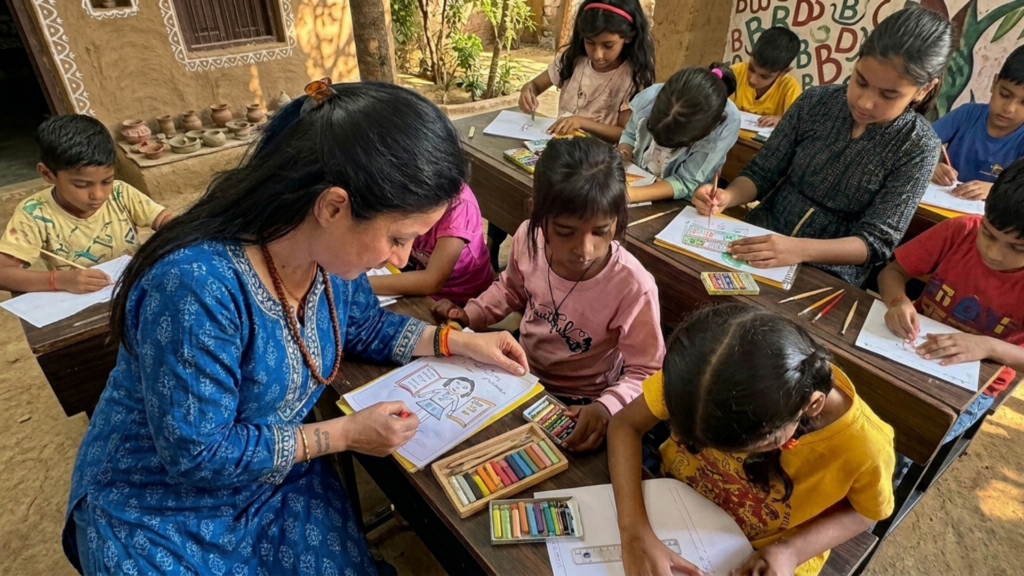
One of her most striking ideas came from a simple observation: if children cannot reach classrooms, why not bring learning to where they are?
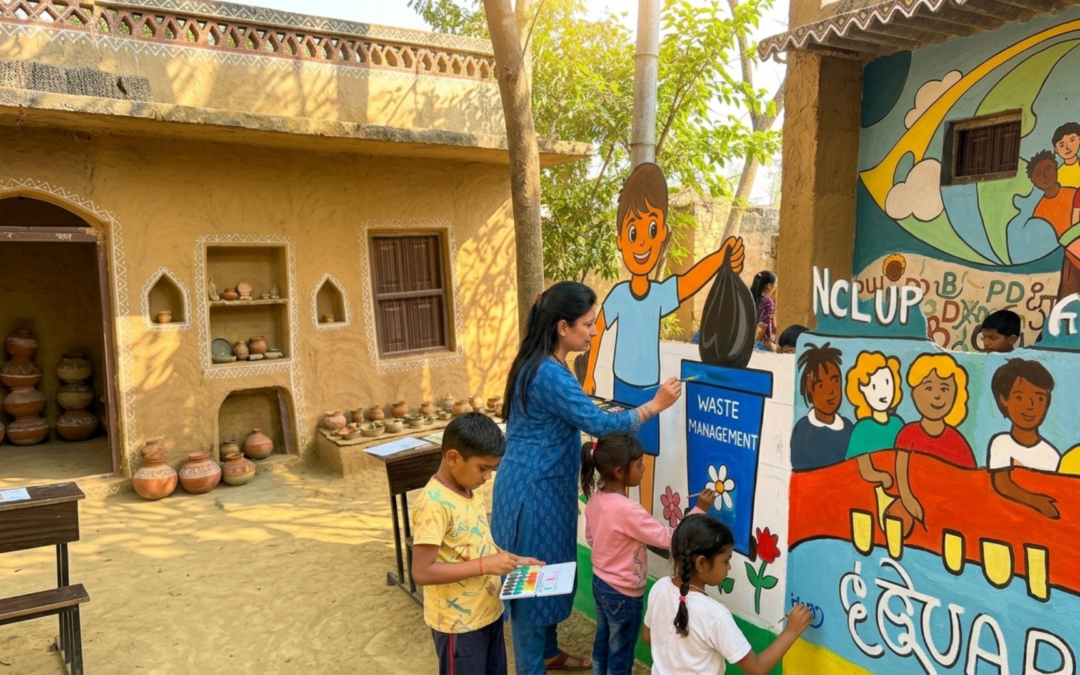
This led to what she called “Living Walls of Learning.”
Instead of blank, neglected walls, entire neighborhoods were transformed with murals. Alphabets, multiplication tables, science concepts, basic facts — all painted in bright, engaging ways. Streets became learning spaces. Children could pick up knowledge while playing, walking, or just being present.
It didn’t feel like school. And that was the point.
Parents began to take interest. Communities got involved. Learning stopped being confined to a building and started becoming part of everyday life.
From One Workshop to Thousands of Lives
What began with a small group of children slowly expanded.
Over the years, her work grew into hundreds of learning centers across India. These spaces were flexible, shaped around the realities of the children they served. Some attended after work. Some needed practical, skill-based learning. The approach was never rigid.
It didn’t try to force children into a system. It adapted to them.
Through the Rouble Nagi Art Foundation, her work has now reached over a million children. But the core idea has remained the same — meet children where they are, and give them a way to be heard.
Recognition, But Not an Endpoint
In 2026, her work received global recognition when she was awarded the Global Teacher Prize at the World Governments Summit in Dubai.
But in her own words, the recognition wasn’t about her. It belonged to the children and communities she worked with.
And the work continues. Plans are already in place to expand programs and create more opportunities, especially in vocational training.
What This Story Really Tells Us
It’s easy to think of education as something that happens in classrooms, with structure and uniformity. But this story pushes us to think differently.
Learning can happen anywhere. On a wall. In a conversation. Through a drawing.
And sometimes, what matters most is not the lesson itself, but the person who notices.
That boy’s drawing could have been ignored. It could have been just another sheet of paper. But someone stopped, asked, and listened.
That made all the difference.
A Small Moment, A Lasting Impact
At its core, this isn’t just a story about art or education. It’s about attention. About empathy.
One child, one drawing, one question — that’s where it began.
And from there, it grew into something that continues to change lives.
Sometimes, all it takes is noticing the small circle of light on an otherwise dark page.
if you are looking for best online drawing classes visit the art classes online